
Physical Gold vs. Gold ETFs: The Truth About Your Returns
The decision to own gold often comes down to a choice between the efficiency of the financial system and the security of a tangible asset. While both physical gold and Gold ETFs track the same spot price, the “truth” about your returns is hidden in the friction of carry costs, tax treatments, and counterparty risks.
As gold prices hit record highs of over $4,500 per ounce in late 2025—and pushed toward a historic $5,600 in early 2026—the performance gap between these two methods became a critical focus for wealth preservation. When the stakes are this high, a 1% difference in execution or fees isn’t just “noise”; it’s a significant portion of your net worth.
1. The Institutional Standard vs. The Low-Cost Rebels
For a liquid, market-driven play, the SPDR Gold Shares (GLD) remains the institutional standard. It offers deep liquidity and a massive options chain, making it the favorite for hedge funds and high-frequency traders. However, its expense ratio of 0.40% means that for every $100,000 invested, you pay $400 annually just for the fund to exist.
In contrast, a new generation of “Mini” and “Micro” ETFs has revolutionized the sector. Alternatives like the iShares Gold Trust Micro (IAUM) and SPDR Gold MiniShares (GLDM) have slashed fees to as low as 0.09% to 0.10%.
The Cost of Inefficiency
In 2025, IAUM significantly outperformed GLD in net return terms simply due to lower internal costs and more precise tracking of the LBMA Gold Price during high-volatility periods. While 30 basis points (0.30%) might seem trivial, over a decade of compounding, it creates a massive divergence in realized wealth. For long-term holders, sticking with the “big name” GLD is often a legacy mistake that costs thousands in unnecessary fees.
2. Physical Gold: The “Front-End” Friction
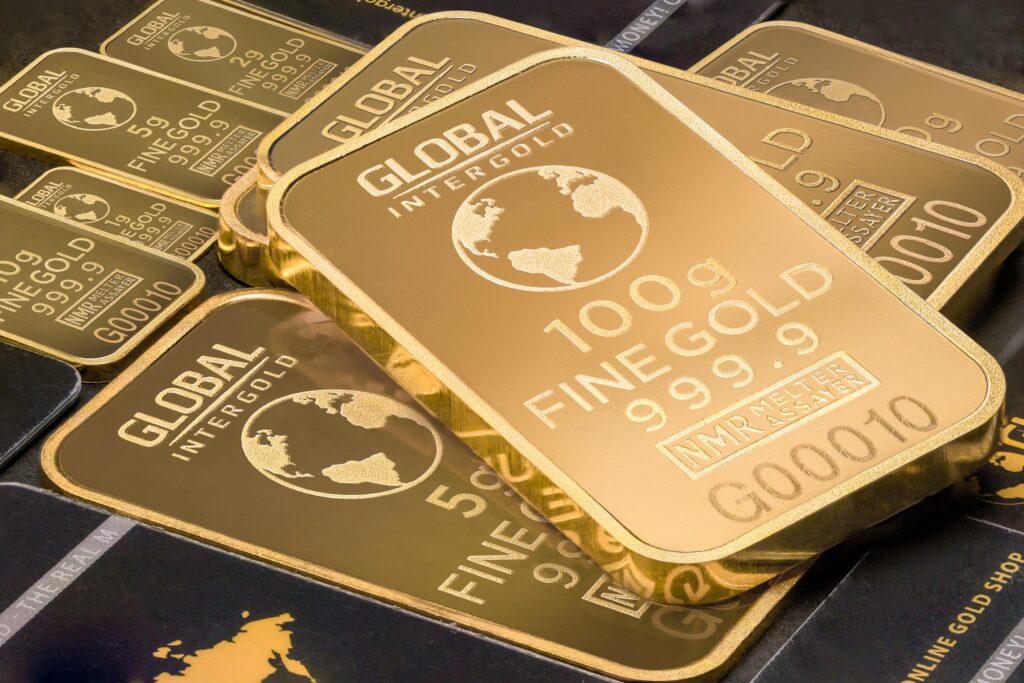
Physical gold carries a type of friction that ETFs do not: the dealer premium. When you buy a physical 1 oz Gold Britannia or American Eagle, you are not paying the “spot” price you see on CNBC. You are paying a premium—usually between 3% and 5%.
The Math of Entry: If gold is trading at $4,500, you might pay $4,680 at the counter. You are effectively starting your investment with a 4% loss.
Furthermore, when it comes time to sell, a dealer will likely buy it back at 1% to 2% below spot. This “round-trip” cost of roughly 6% makes physical gold a mathematical impossibility for short-term traders. For a “decadal” investor, however, this one-time friction often pales in comparison to the recurring, compounding management fees of an expensive ETF.
3. Storage: The Silent Eroder of Physical Returns
If you don’t store your gold under a floorboard, you are paying for a vault. Professional storage services typically charge 0.5% to 1% annually, which includes insurance and armed security. This is double or triple the expense ratio of a low-cost ETF like IAUM or GLDM.
However, the “return” on physical gold includes a hedge against systemic failure. During the geopolitical shocks of 2025 and 2026, investors in physical bullion faced zero counterparty risk. They did not have to worry about whether a fund’s custodian—often a major bank like HSBC or JPMorgan—was solvent or if the digital “line of code” representing their gold would be accessible during a bank holiday. In a total market freeze, an ETF is a legal claim; a gold bar is a universal currency.
4. Taxation: The Overlooked Divergence
Taxation creates the most significant divergence in real-world returns, often varying wildly by jurisdiction.
The United States: The Collectibles Trap
In the U.S., most Gold ETFs are taxed as “collectibles.” This means long-term capital gains are capped at 28%, rather than the more favorable 15% or 20% rates applied to standard stocks.
The United Kingdom: The Sovereign Loophole
In the UK, a unique legal loophole exists. Because Gold Sovereign and Britannia coins are technically legal tender, they are exempt from Capital Gains Tax (CGT). For a UK investor who saw gold surge to record highs in early 2026, the difference between paying 20% CGT on an ETF profit and 0% on physical coins represents a massive disparity in real-world wealth.
5. “Paper Gold” vs. The Vaulted Reality
The “Paper Gold” debate intensified in 2026 as the volume of gold-backed derivatives reached new heights. Many sophisticated analysts have noted that the total amount of “paper gold” (ETFs, futures, and unallocated accounts) far exceeds the actual physical metal held in global vaults.
While reputable ETFs like GLD and IAU are audited, the complexity of the custody chain remains a theoretical risk. If a “run on the vaults” were to occur, ETF holders would likely receive a cash settlement based on the last trading price, rather than the physical metal itself. If your goal for owning gold is to have an asset that survives a currency collapse, a cash settlement in that collapsing currency is a failure of the investment’s primary purpose.
6. Jewelry: The Least Efficient Path
A common misconception is that gold jewelry is a viable investment. In reality, “making charges” and design markups can add 10% to 20% to the cost above the melt value. Unless you are buying high-purity (22K or 24K) investment-grade jewelry, you are paying for art and craftsmanship, not just the metal. When gold is at $5,000, you are paying $6,000 for a necklace that a dealer will only buy back for $4,900.
7. How to Choose Your Path
Ultimately, your choice defines your objective. To make the most informed decision, many investors use professional analysis platforms. While many tools focus on stocks, you can find deep insights into asset allocation and intrinsic value through services like Tykr, which helps investors move beyond guesswork and into data-driven decision-making.
| Feature | Gold ETF (Low Cost) | Physical Bullion |
| Best For | Trading / Speculation | Wealth Preservation |
| Annual Fee | 0.10% – 0.25% | 0.5% – 1.0% (Storage) |
| Liquidity | Instant (Market Hours) | 24-48 Hours (Dealer) |
| Counterparty Risk | Yes (Custodian/Broker) | None (If self-stored) |
| Break-Even Gain | ~0.20% | ~5.0% – 7.0% |
Conclusion: Insurance or Investment?
If you are speculating on a six-month price move driven by inflation data or Federal Reserve policy, an ETF is the only logical choice due to its liquidity and low spreads. However, if you are building a multi-generational “insurance” policy against currency debasement or systemic fragility, the premium and storage costs of physical gold are simply the insurance premiums you pay for peace of mind.
In the volatile landscape of 2026, where gold has established a new “floor” far above historical norms, the most successful investors are those who understand that they aren’t just buying gold—they are choosing a delivery mechanism for their wealth.
FAQ
Which is cheaper for a 1-year trade?
Gold ETFs (specifically low-cost ones like IAUM or GLDM) are significantly cheaper for short durations because they lack the high dealer premiums (3-5%) associated with physical coins.
Can I redeem my ETF shares for physical gold?
For the vast majority of retail investors, the answer is no. Only “Authorized Participants” (large institutions) can typically redeem shares for physical bars. Retail investors simply sell their shares for cash.
Does physical gold pay dividends?
No. Gold is a non-productive asset. Unlike stocks or bonds, it produces no cash flow. Your only return comes from price appreciation.
Why did IAUM perform better than GLD in 2025/2026?
The difference is almost entirely due to the expense ratio. GLD charges 0.40% while IAUM charges 0.09%. Over a year of high prices, that 0.31% difference stays in the investor’s pocket rather than going to the fund manager.
Should I buy “Digital Gold”?
Digital gold apps often offer a middle ground, but be wary of the “spread.” Some apps charge 2-3% on the buy/sell side, which can be just as expensive as physical bullion without the benefit of holding the asset yourself.
How do I track my overall portfolio performance?
For investors balancing gold, stocks, and other assets, platforms like Tykr offer a streamlined way to analyze your holdings and ensure you are actually outperforming the market after all these hidden costs are considered.