
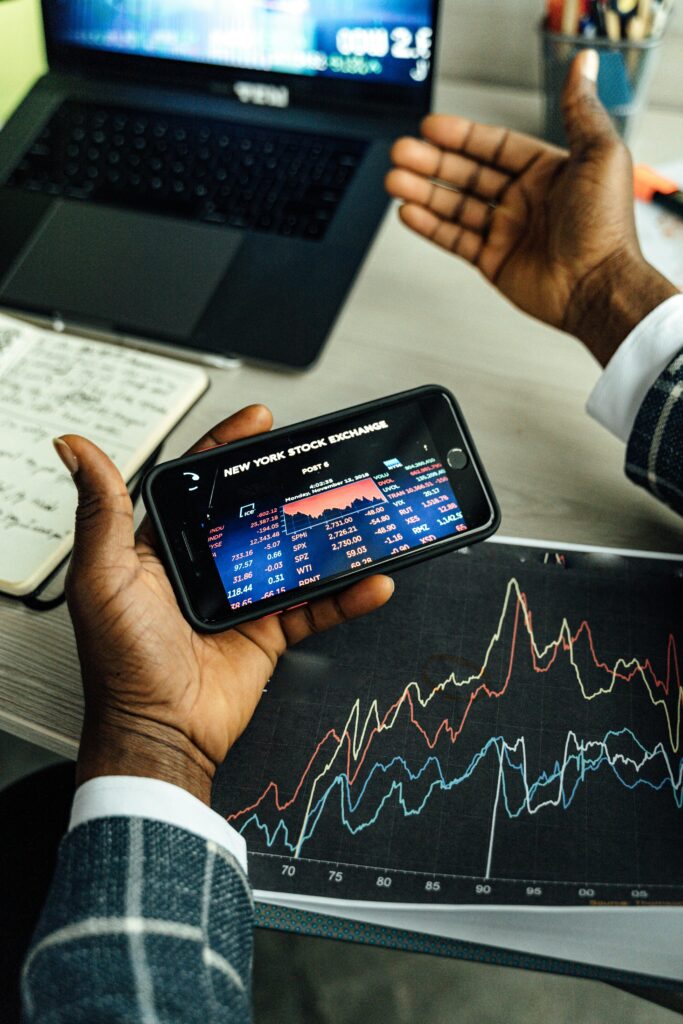
Professional trading is no longer just about “picking winners”—it is an exercise in mathematical survival. As institutional algorithms and 24/7 liquidity cycles dominate, the only variable you truly control is the size of your exit.
1. The Core Formula: Units over Dollars
Professional traders never ask “How many dollars should I put in?” They ask, “Where is my invalidation point?”
The universal 2026 formula for position sizing is:
$$Position Size (Units) = \frac{Account Equity \times Risk \%}{Entry Price – Stop Loss Price}$$
- Account Equity: Your current balance (or the portion allocated to that strategy).
- Risk %: Typically 0.5% to 2%. If you risk 1% on a $10,000 tactical sub-account, your “Risk Amount” is $100.
- Stop Loss: A structural price level where your trade thesis is proven wrong.
2. Advanced Sourcing Platforms for Risk Data (2026)
In 2026, professional traders use these platforms to calculate real-time risk before the trade is even placed:
| Platform | Key Risk Feature (2026) | Best For |
| QuantConnect | Alpha Streams: Backtests your sizing strategy against 10+ years of historical volatility. | Algorithmic Traders |
| TradingView | Long/Short Position Tool: Automatically calculates “Quantity” based on your stop-loss drag. | Discretionary Traders |
| Edgewonk | Trade Journaling 4.0: AI analyzes your “Tilt” (emotional oversizing) and suggests size reductions. | Behavioral Risk |
| Risk of Ruin (Tool) | Monte Carlo Simulators: Runs 10,000 scenarios to show the % chance of account blow-up at current sizes. | Math-First Traders |
| Altrady | Multi-Exchange Risk Manager: Syncs across Binance, Bybit, and Kraken to monitor “Gross Exposure.” | Crypto/Tactical Traders |
3. The Three Professional Sizing Models
A. Fixed Fractional (The “Industry Standard”)
You risk a fixed percentage (e.g., 1%) of your account on every trade. As your account grows, your dollar risk grows; as it shrinks, your risk scales down automatically.
- Best For: Most traders. It is the most robust way to survive a “String of Losers.”
B. Volatility-Based (The “Smart” Size)
Instead of a fixed percentage, you use the ATR (Average True Range).
- The Logic: If TSLA is moving $20 a day (High Vol), your stop is wider, and your position size is smaller. If it’s moving $5 a day (Low Vol), your position size is larger.
- Platform Tip: Most 2026 MetaTrader 5 EAs use “ATR-Multipliers” to automate this.
C. Fixed Ratio (The “Aggressive” Growth)
Developed by Ryan Jones, this increases your position size only after you have earned a specific “Delta” of profit.
- 2026 Use Case: Excellent for aggressively scaling the 20% tactical portion of your portfolio once you’ve hit your initial profit targets.
4. The 2026 “Kill Switch” Protocol
Professional desks in 2026 use a Multi-Layered Risk Ceiling to prevent “Fat Finger” or “Revenge Trading” errors:
- Per-Trade Cap: Never risk more than 2%.
- Per-Day Cap: If you lose 5% in one day, your platform (via API) should lock you out for 24 hours.
- The Correlation Guard: If you are “Long” TSLA and “Long” BTC, recognize that they are highly correlated in 2026. You shouldn’t risk 2% on both; you should risk 1% on each to keep your “Risk-On” exposure at 2% total.
FAQ
What is “Anti-Martingale” sizing?
It is the opposite of doubling down. You increase your size when you are winning and decrease it when you are losing. This is the cornerstone of the 2026 professional “Trend Following.”
How does “Slippage” affect my size?
In 2026, thin markets (overnight) cause slippage. If you expect 0.5% slippage, you must reduce your position size by 10-15% to account for the “Hidden Cost” of exiting.
What is a “Black Swan” Buffer?
Professional traders in 2026 assume their stop-loss will be “gapped” over. They keep a “Cash Reserve” outside the brokerage to ensure they can fund the account if a gap-down exceeds their margin.
Why is 1% the “Magic Number”?
Mathematically, you would need to lose 68 trades in a row to lose 50% of your account at a 1% risk level. At 5% risk, you only need 13 losses to lose 50%.