
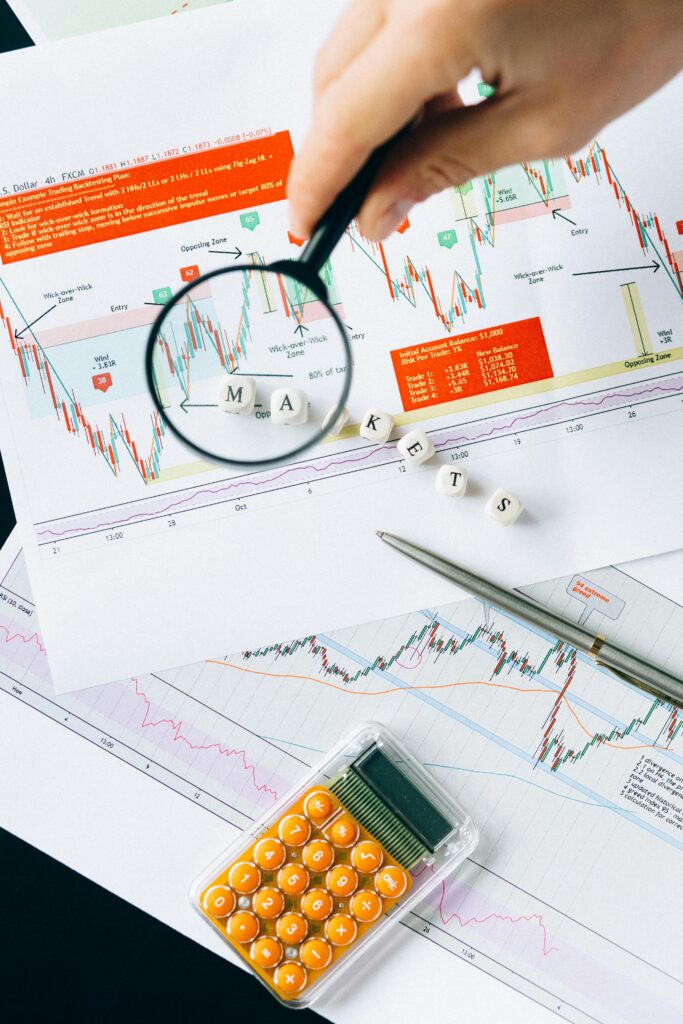
In the financial landscape of 2026, the choice between Active Trading and Long-Term Investing has become more complex. With the S&P 500 targeting levels around 7,500 and a historic AI-driven CAPEX cycle underway, the “best” path depends on whether you seek to capture market “alpha” through volatility or build “wealth” through the compounding of corporate earnings.
Institutional data from BlackRock and J.P. Morgan suggest that 2026 is a year of “market dispersion,” where the gap between winning and losing stocks is widening, creating unique opportunities for both paths.
1. Active Trading: The Search for “Alpha” in 2026
Active trading involves high-frequency buying and selling—often within days or hours—to profit from price swings. In 2026, this path is driven by Macro Volatility and Sector Rotation.
- The Opportunity: With the Federal Reserve expected to cut rates by another 50–100 basis points in 2026, markets are highly sensitive to economic data. Traders using platforms like Interactive Brokers or NinjaTrader profit from the “Second Wave” reactions to CPI and employment reports.
- The “K-Shaped” Advantage: Since only about 60% of the S&P 500 is expected to post positive returns this year, active traders can use Short Selling or Put Options to profit from the 40% of companies struggling with high debt and labor costs.
- The High-Performance Tier: Pro traders are currently focusing on the “Mag 7” dispersion. While the Magnificent 7 (e.g., Nvidia, Microsoft) led the market in 2024, 2026 is seeing a “decoupling” where individual earnings misses result in 15%–20% intra-day drops, perfect for volatility scalpers.
2. Long-Term Investing: The Power of 2026 Compounding
Long-term investing in 2026 is focused on “Time in the Market.” With U.S. large-cap equities projected to return approximately 6.7% to 10% annually over the next decade, the long game remains the most statistically reliable way to build an empire.
- The Core Strategy: Using low-cost ETFs like VOO (Vanguard S&P 500) or IVV (iShares Core S&P 500) allows you to capture the 14%–16% earnings-per-share growth projected for 2026 without the stress of daily monitoring.
- The AI Productivity Tailwind: Long-term holders are betting on the $500+ billion in AI infrastructure investments made in 2025–2026. Experts at Goldman Sachs suggest this will lead to a 31% boost in corporate earnings by late 2027 as AI-driven labor efficiencies kick in.
- Lower Friction: The “hidden” cost of active trading is the 28% capital gains tax (in many regions) and transaction fees. Long-term investors benefit from Tax-Loss Harvesting and the lower tax rates applied to assets held for over a year.
Active vs. Passive: 2026 Performance Metrics
| Metric | Active Trading (Typical 2026) | Long-Term Investing (2026 Est.) |
| Projected Annual ROI | -100% to +500% (Extreme variance) | ~7% to 12% (Consistent) |
| Time Commitment | 20–40+ hours per week | 1–2 hours per month |
| Transaction Costs | High. (Commissions, spreads, slippage) | Ultra-Low. (0.03% expense ratios) |
| Stress Level | High. Tied to 1-minute candles. | Low. Focused on 5-year cycles. |
| Primary Tool | Bookmap / Newsquawk | Vanguard / Fidelity / Schwab |
How to Choose Your Path
Choose Active Trading if:
- You have a minimum of $25,000 in risk capital (to avoid the PDT rule in the U.S.).
- You possess a deep understanding of Technical Analysis and Order Flow.
- You can remain emotionally detached when a trade goes 2% against you in seconds.
Choose Long-Term Investing if:
- Your goal is Retirement or multi-generational wealth.
- You have a full-time career and cannot watch a screen during the New York Open.
- You believe in the “Structural Resilience” of the global economy and want to benefit from Dividends (currently projected at a 1.7% contribution to total returns).
The “Hybrid” Solution: The 80/20 Rule
Many “Empire Builders” in 2026 use a hybrid approach. They place 80% of their capital into long-term index funds (like VTI or QQQM) and use the remaining 20% for “Satellite” active trading in high-growth areas like Crypto or AI Sector ETFs (e.g., SOXX). This provides the safety of the broad market with the “upside” potential of active management.
FAQ
Is the “Four-Year Cycle” in Crypto dead in 2026? According to Grayscale, the cycle has likely ended due to institutional ETF inflows. Crypto is now behaving more like a “High-Beta” tech stock, making it a prime target for active traders.
What is the “One Big Beautiful Bill Act” mentioned in the 2026 outlooks? This is the 2025 fiscal policy that provided tax cuts for consumers and businesses, providing a “lagged” support for stock prices throughout 2026.
Which platforms are best for active trading in 2026? Bybit and Binance lead for crypto, while TradeStation and Interactive Brokers remain the standards for equities and futures.
Can AI trade for me? While AI Trading Bots are common, they often fail due to “overfitting.” Professionals use AI for Data Analysis but execute trades manually or via audited “Algorithmic Execution” scripts.
Does “Buy and Hold” still work with 2.4% inflation? Yes. Stocks are “Real Assets.” As prices rise, company revenues and dividends typically rise as well, making equities one of the best long-term hedges against the “Inflation Tax.”