
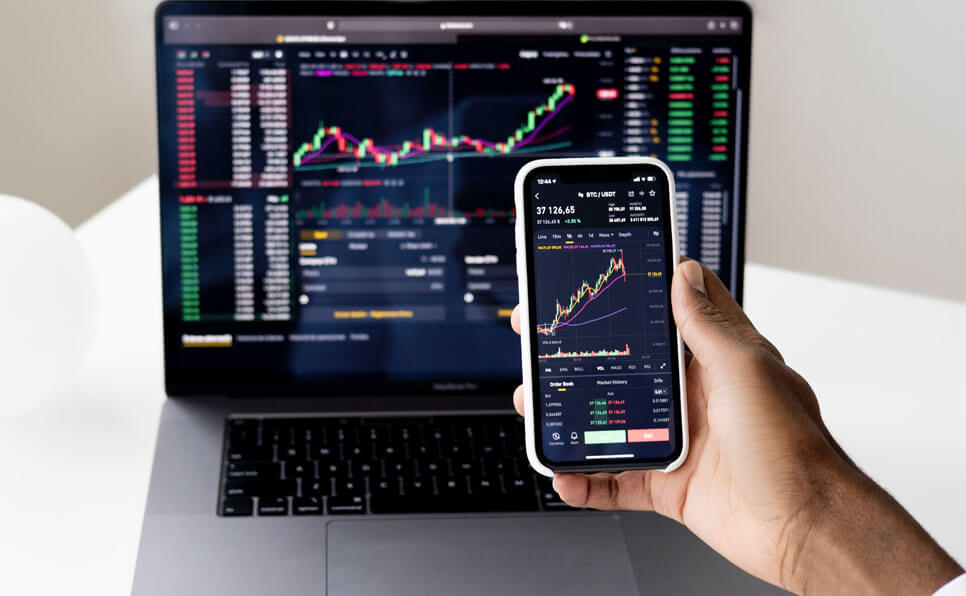
Market orders are popular because they feel simple. You click buy or sell, and the trade happens immediately. For many beginners, that feels like the safest option. No waiting. No guessing. No missed trades.
This convenience has a cost.
That cost rarely shows up as a visible fee. It appears in execution quality, price slippage, and outcomes that look slightly worse than expected. Over time, those small differences add up.
Understanding the difference between market and limit orders is less about trading tactics and more about controlling friction.
A market order tells your broker to execute a trade immediately at the best available price. You are prioritizing speed over price.
A limit order tells your broker the maximum price you are willing to pay when buying, or the minimum price you are willing to accept when selling. You are prioritizing price over speed.
The difference sounds minor. In practice, it matters more than most beginners expect.
The first hidden cost of market orders is the bid-ask spread.
Every tradable asset has two prices. The bid is what buyers are offering. The ask is what sellers are asking. The gap between them is the spread.
When you place a market buy order, you almost always pay the ask. When you place a market sell order, you almost always receive the bid.
In highly liquid stocks traded on major venues like the New York Stock Exchange or NASDAQ, spreads are often small. In less liquid stocks, ETFs, or during volatile periods, spreads widen.
That widening is a real cost.
Even a spread of a few cents becomes meaningful when applied repeatedly across many trades.
Slippage is the second hidden cost.
Slippage occurs when a market order executes at a worse price than expected. This often happens when there is insufficient liquidity at the quoted price.
You see a stock trading at $50. You place a market buy. The order fills at $50.20 because available shares at $50 were limited.
The difference is not charged as a fee. It is embedded in the execution.
Slippage increases during fast markets, low-volume periods, and news events. It can occur even in large, well-known stocks when volatility spikes.
Limit orders reduce slippage by defining acceptable prices.
Another issue is false certainty.
Market orders give the illusion of control. You know the trade will execute. What you do not know is the price you will receive.
Limit orders invert that relationship. You know the price. You do not know whether the trade will execute.
For long-term investors, price control is often more important than immediacy.
Market orders also interact poorly with intraday liquidity patterns.
Liquidity is not constant throughout the trading day. It is usually strongest near the open and the close. Midday trading is often thinner. Trading outside regular hours is significantly less liquid.
Placing market orders during thin periods increases execution risk.
Limit orders help protect against poor fills during these windows.
Another hidden cost is behavior.
Market orders encourage impulsive action. They remove friction. When reacting to headlines, price moves, or fear, the easiest action is often the worst one.
Limit orders force a pause. They require you to define a price. This small delay can reduce emotional trading.
This behavioral benefit matters more than most beginners realize.
Convenience also matters in ETFs.
Highly liquid ETFs with liquid underlying assets usually handle market orders well in calm conditions. During stress, spreads widen. Market orders can execute far from net asset value.
Investors often blame the ETF for poor performance when the issue was execution timing.
Limit orders are especially important for ETFs that hold less liquid assets.
Another misconception is that long-term investors do not need to care.
Long-term investing reduces the impact of small execution errors, but it does not eliminate them. Every entry, exit, rebalance, and dividend reinvestment involves execution.
Repeated small inefficiencies compound.
Over the years, poor execution can quietly reduce realized returns by more than management fees.
Market orders are not inherently bad.
They make sense when liquidity is deep, spreads are tight, and execution certainty matters more than marginal price differences. For example, exiting a position during a fast market may justify using a market order.
The problem is the default behavior.
Many beginners use market orders for every trade, regardless of liquidity, time of day, or volatility.
That habit transfers execution risk entirely to the investor.
Limit orders are not perfect either.
They may not execute. Prices may move away. Opportunities may be missed. That frustration often pushes beginners back toward market orders.
The key is intentional use.
Market orders prioritize speed.
Limit orders prioritize price.
Understanding when each matters is the real skill.
For long-term investors, most trades do not require immediate execution. Paying a few cents more per share rarely changes investment outcomes, but repeatedly accepting poor prices does.
Convenience feels harmless. In markets, it rarely is.
Execution is part of investing, not an afterthought.
Those who learn to control it keep more of their returns.
FAQ
Are market orders always bad?
No. They are useful when liquidity is high and speed matters.
Why do beginners lose money with market orders?
Spreads and slippage are invisible costs that add up over time.
Are limit orders safer?
They offer price control but do not guarantee execution.
Do limit orders work for ETFs?
Yes, especially for less liquid ETFs or during volatile periods.
What is a good default for beginners?
Limit orders for most trades, market orders only when speed is critical.