
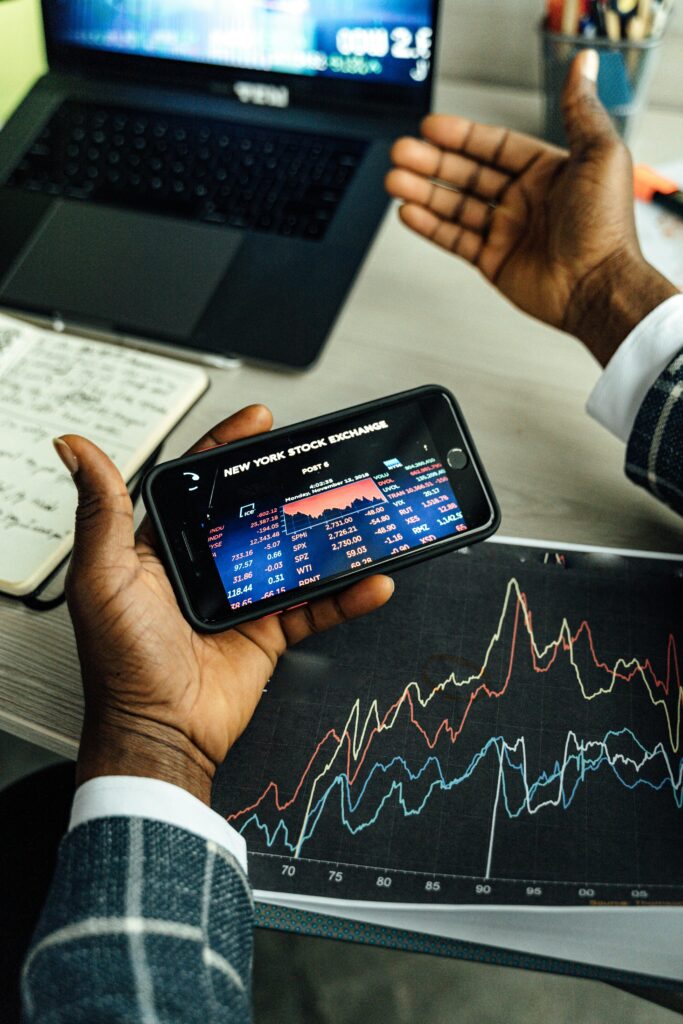
The data is undeniable: the “action” of day trading is often a tax on your wealth. Academic research from Cambridge University (late 2025) tracked retail accounts and found that while day traders averaged -3.8% annual returns after costs, swing traders achieved +2.1%.
Swing trading saves your portfolio not by working harder, but by working less. It moves you away from the “noise” of 1-minute candles and places you in the “flow” of multi-day trends.+1
1. The Psychological “Control” Trap
Overtrading is rarely a technical error; it is an emotional reaction to uncertainty.
- The Illusion of Productivity: Many traders feel that clicking “Buy” or “Sell” 20 times a day is “work.” In reality, the market does not reward activity; it rewards patience.+1
- Decision Fatigue: By the 10th trade of the day, your brain’s ability to assess risk is depleted. Swing trading reduces your critical decisions from 50 per week to 2 or 3, ensuring each one is high-quality.
- Algorithm Immunity: In 2026, high-frequency algos dominate the sub-5-minute timeframes. By trading the 4-hour or Daily charts, you operate on a level where human intuition and structural analysis still hold an edge.
2. The Mathematics of Friction
Every trade has a “toll.” In a portfolio containing TSLA, Gold, and Silver, overtrading can quietly erode 5–10% of your capital annually through “Friction.”
- The Spread & Commission Gap: A day trader might target a 0.5% move but pay 0.1% in fees—losing 20% of their gross profit instantly. A swing trader targeting a 10% move pays the same 0.1%, losing only 1% of their profit to fees.
- Slippage: In volatile 2026 markets, entering and exiting large positions rapidly causes “slippage” (getting a worse price than intended). Swing traders use limit orders at key structural levels, often getting “price improvement” instead of slippage.
3. Top Platforms for Swing Trading (2026)
| Platform | Best For | Key Feature 2026 |
| Interactive Brokers (IBKR) | Global Multi-Asset | Access to 160+ markets; best for holding Gold spot while trading TSLA swings. |
| TradingView | Visual Strategy | Integrated “Pine Script” bots that can alert you when a 4-hour trend confirms. |
| TrendSpider | Automation | AI-driven “Trendline Recognition” that spots support/resistance levels humans miss. |
| Moomoo | Advanced Data | Level 2 data and “Short Interest” trackers, crucial for spotting swing reversals. |
| Charles Schwab | Safe-Haven Assets | Excellent for swing trading ETFs and “Blue Chip” stocks with zero commission. |
4. The 2026 Swing Strategy: “The 3-Pillar Filter”
To stop overtrading, you must replace the “impulse to click” with a “checklist to verify.” Before any trade in 2026, ask:
- Structure: Is the price at a major Daily support or resistance level? (Use Fibonacci Retracements or Bollinger Bands).
- Momentum: Do the indicators (Williams %R or RSI) show the trend is exhausted or just beginning?
- Catalyst: Is there a 2026 macro event (Earnings, Fed meeting, or Geopolitical shift) that supports the move?
FAQ
How many trades should I take per week?
A professional swing trader typically takes 2 to 5 trades per week. If you are taking more than 10, you are likely drifting into day trading territory.
What are the best indicators for swing trading in 2026?
Backtests from Quantified Strategies suggest Williams %R and Internal Bar Strength (IBS) are the most effective for risk-adjusted returns, outperforming the standard RSI in 2026’s volatile environment.
Can I swing trade with a small account?
Yes. Unlike day trading (which requires $25k in the US due to PDT rules), you can swing trade with as little as $1,000–$5,000 on platforms like Webull or Robinhood.
What is the “Weekend Gap” risk?
The biggest risk of swing trading is a major news event occurring while markets are closed. In 2026, many traders use Options (Puts) as “insurance” to protect their swing positions over the weekend.
How do I handle “FOMO” when a stock like TSLA runs without me?
Remind yourself that swing trading is about “Capturing the Meat” of a move, not the exact bottom or top. Missing the first 10% of a 40% move is a professional’s trade; chasing the top is a beginner’s mistake.