
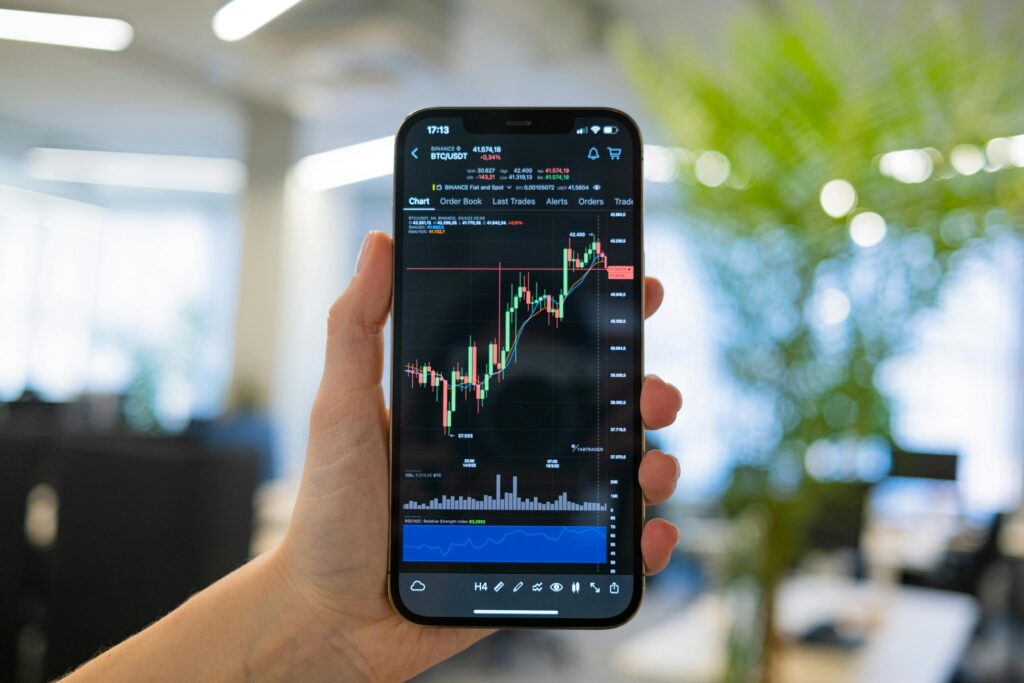
In the fast-paced financial ecosystem of 2026, News Trading has evolved from a simple reaction game into a sophisticated battle of infrastructure and timing. Whether you are trading the S&P 500 or Bitcoin, the “truth” is that traditional retail traders can no longer beat High-Frequency Trading (HFT) bots in the first 500 milliseconds.
To profit in 2026, you must target the Second and Third Waves of market reaction—where human conviction and institutional repositioning create sustained trends.
1. The 2026 Infrastructure: How to Get Data First
You cannot trade news using standard TV broadcasts or free websites; by the time you see the headline, the move is over. Professionals use Squawk Services and Low-Latency Aggregators.
- Bloomberg Terminal & Reuters Eikon: The gold standard for the stock market. These provide “terminal-speed” headlines on earnings for companies like Nvidia (NVDA) or Apple (AAPL).
- FinancialJuice & Newsquawk: Faster, audio-based squawk boxes that read out economic data (CPI, Non-Farm Payrolls) in real-time, allowing you to keep your eyes on the charts.
- Tree News & DB (Direct Bridge): Essential for crypto. These tools scrape the SEC, Binance announcements, and influential X (Twitter) accounts, delivering news to your dashboard in under 100 milliseconds.
2. Strategy: The “Three-Wave” Execution
In 2026, the market reaction to news typically follows a predictable three-wave structure. Trying to enter during Wave 1 is often a “liquidity trap” due to spread widening.
Wave 1: The Bot Impulse (0–2 Seconds)
Algorithms react to keywords. If the Federal Reserve FOMC statement includes the word “Hawkish,” bots sell everything instantly.
- The Risk: Spreads on exchanges like Bybit or Binance can widen by 10x, and slippage will destroy your entry. Do not trade here.
Wave 2: The True Direction (2–15 Seconds)
This is where professional “News Traders” enter. Once the initial bot chaos settles, the market begins to digest the actual numbers versus analyst expectations.
- The Play: Look for a “Secondary Impulse.” If the price breaks the high/low of the first 2-second candle, enter in that direction.
Wave 3: The Institutional Re-rating (30 Seconds – 2 Hours)
This is the safest wave. Large funds and institutional investors on platforms like Coinbase Prime or Interactive Brokers take time to adjust their multi-million dollar positions.
- The Play: Trade the “Post-News Drift.” If a company like Tesla (TSLA) beats earnings significantly, the stock often continues to climb for several hours as “Smart Money” accumulates.
3. Stocks vs. Crypto: Different Rules for 2026
Trading news in the stock market is about Expectations, while in crypto, it is often about Liquidity.
- Stock Market (Equities): Focus on the Economic Calendar. Key 2026 triggers include CPI (Inflation), NFP (Jobs), and FOMC (Interest Rates). If the CPI is 0.2% higher than the 2.1% forecast, the S&P 500 (SPY) will likely drop as the market prices in “higher for longer” rates.
- Crypto Market: Focus on Regulatory and Exchange News. In early 2026, a headline about a “Spot Solana ETF Approval” or a new SEC lawsuit can move Solana (SOL) by 5-10% in minutes. Use Lookonchain to track “Smart Money” wallets reacting to news on-chain before it hits the mainstream.
4. Essential Tools for News Traders
| Tool Type | Platform Name | Purpose in 2026 |
| Data Terminal | TradingView | Real-time economic calendar and social sentiment overlays. |
| Crypto Speed | Tree News (Terminal) | The fastest scraping tool for crypto-specific headlines. |
| Order Flow | Bookmap | Visualizes “Liquidity Walls” to see where bots are placing traps during news. |
| Execution | NinjaTrader | Professional-grade order entry for futures (NQ/ES) to ensure fast fills. |
5. The “Fade the News” Strategy (Mean Reversion)
Often, the market “overreacts” to a headline. In 2026, many traders profit by fading the initial move once the RSI (Relative Strength Index) hits extreme levels (Above 85 or below 15) on the 1-minute chart.
- Example: A “Minor” bad news event causes a 4% flash crash in Ethereum (ETH). If the fundamental health of the network is unchanged, traders “Buy the Dip” at the 15-minute mark, betting that the initial bot reaction was too aggressive.
FAQ
What is “Front-Running” the news?
In 2026, this is usually done by monitoring “Options Flow” or “On-chain Whale Alerts” via platforms like Whale Alert. If $500M in stablecoins moves to an exchange 5 minutes before a major announcement, someone likely knows the news is coming.
Why did the price go down on “Good News”?
This is the “Sell the Fact” phenomenon. If the market already priced in a 10% gain, expecting good news, even a positive result can lead to profit-taking.
Is news trading legal?
Trading on public news is perfectly legal and is a cornerstone of market efficiency. Trading on non-public (insider) information is illegal.
What is the best time to trade news?
For stocks, the first 30 minutes of the New York Open (9:30 AM EST). For crypto, volatility is 24/7, but the highest volume occurs during the “overlap” of London and New York sessions.
How do I protect my capital?
Always use “One Cancels the Other” (OCO) orders. Set a stop-loss the moment you enter, as news-driven volatility can reverse a 5% gain into a 5% loss in seconds.