
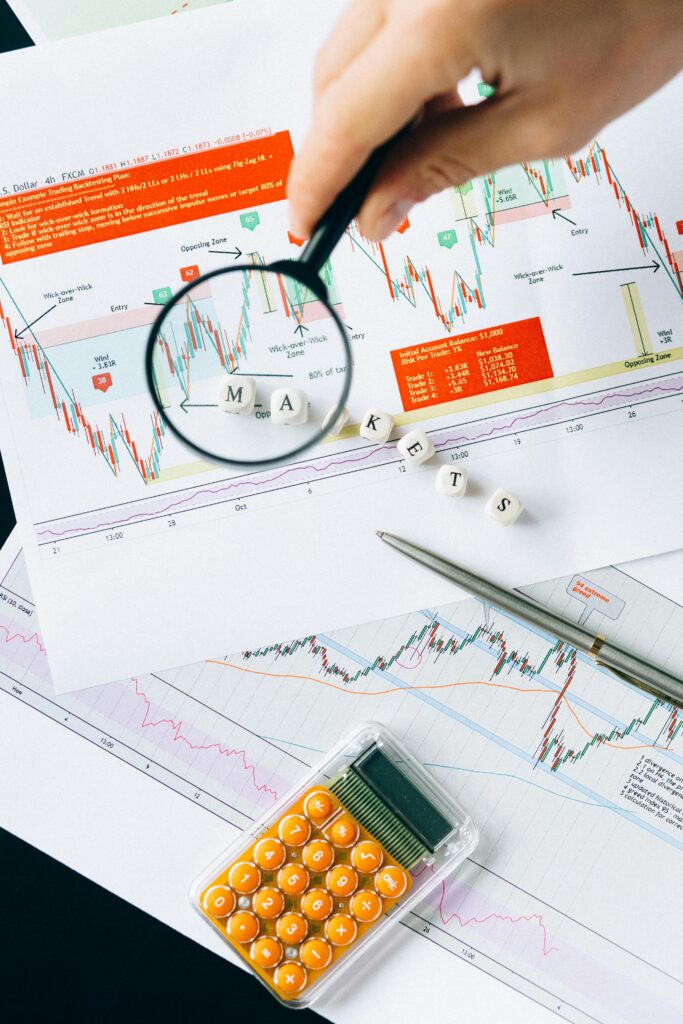
Active Trading vs. Long-Term Investing: How to Choose Your Path in the 2026 Economy
In the financial landscape of 2026, the choice between Active Trading and Long-Term Investing has evolved beyond simple preference. With the S&P 500 hovering around the historic 7,500 mark and an unprecedented AI-driven CAPEX (Capital Expenditure) cycle reshaping global industry, the “best” path is now dictated by your risk tolerance, your relationship with time, and your ultimate financial objective.
Institutional data from global giants like BlackRock and J.P. Morgan suggest that 2026 is a year of “Extreme Market Dispersion.” The gap between “winning” sectors (AI infrastructure, biotech, energy) and “losing” sectors (legacy retail, debt-heavy manufacturing) is widening. This creates a fertile ground for the active “alpha” seeker while providing a resilient, albeit volatile, foundation for the long-term “wealth” builder.
1. Active Trading: The Search for “Alpha” in 2026
Active trading in 2026 is no longer about “guessing” which way a stock will go. It is a high-performance discipline driven by Macro Volatility and Sector Rotation. Traders today profit from the rapid movement of capital as it shifts between asset classes in response to real-time economic shifts.
The Opportunity: Rate Cut Volatility
With the Federal Reserve continuing its path of rate normalization—expected to cut another 50–100 basis points in 2026—markets have become hyper-sensitive to every data point. Active traders profit from the “Second Wave” reactions: the initial price spike on a CPI report, followed by the institutional repositioning that occurs hours later.
The “K-Shaped” Advantage
In 2026, only about 60% of the S&P 500 is expected to post positive returns. For a long-term investor, the losing 40% is a “drag” on the index. For an active trader, that 40% is a goldmine. By using Short Selling or Put Options on companies struggling with high labor costs and debt service, traders can generate positive returns even during market pullbacks.
The Tools of the Trade
Professional active trading requires a technical edge. In the equity and forex markets, platforms like RoboForex have become the standard for 2026. They provide the necessary execution speed and deep liquidity required to capitalize on the “Mag 7” dispersion—the current phenomenon where individual earnings “misses” result in 15%–20% intra-day drops. If you aren’t using a high-tier broker, “slippage” will destroy your edge before the trade even matures.
2. Long-Term Investing: The Power of 2026 Compounding
While active trading is about capturing the “swing,” long-term investing is about capturing the “corporate machine.” In 2026, U.S. large-cap equities are projected to maintain an earnings-per-share growth rate of 14%–16%, driven by the $500+ billion AI infrastructure investments made over the past two years.
The “AI Productivity” Tailwind
Long-term holders are the primary beneficiaries of the “Efficiency Era.” Goldman Sachs analysts suggest that the AI-driven labor efficiencies kicking in late in 2026 will lead to a 31% boost in corporate earnings by 2027. By holding low-cost ETFs (like VOO or QQQM), you are effectively “owning” the global increase in productivity without the stress of timing the market.
Tax and Friction Advantages
The “hidden” cost of active trading is the Tax-Drag. In many jurisdictions, short-term capital gains are taxed at 28% or higher, whereas long-term holdings (held for over a year) benefit from significantly lower rates. Furthermore, the 2025 “One Big Beautiful Bill Act”—the fiscal policy that extended consumer and business tax cuts—provides a structural floor for stock prices throughout 2026, rewarding those who stay the course.
3. Comparing Performance Metrics (2026 Estimates)
| Metric | Active Trading (2026) | Long-Term Investing (2026) |
| Projected Annual ROI | -100% to +500% (Extreme) | ~7.5% to 12% (Consistent) |
| Time Commitment | 20–40+ hours per week | 1–2 hours per month |
| Transaction Costs | High. (Spreads, slippage, fees) | Ultra-Low. (0.03% expense ratios) |
| Stress Level | High. Tied to 1-minute candles. | Low. Focused on 5-year cycles. |
| Primary Risk | “Black Swan” events & Human Error | Long-term economic stagnation |
4. The “Hybrid” Solution: The 80/20 Rule
In 2026, the most successful “Empire Builders” rarely choose only one path. They utilize the Hybrid Model:
- The Core (80%): Placed in diversified, low-cost index funds. This ensures that their “baseline” wealth grows with the global economy.
- The Satellite (20%): Allocated to active trading and high-conviction “thematic” plays (e.g., Crypto, Biotech, AI-hardware).
Automating the “Satellite” with CryptoHopper
The biggest challenge of the active 20% is Time. In 2026, even the most dedicated traders cannot watch the 24/7 crypto and global markets. This is why professionals have shifted to Algorithmic Execution.
5. How to Choose Your Path
Choose Active Trading if:
- You have the capital: A minimum of $25,000 is recommended (especially in the U.S.) to avoid the “Pattern Day Trader” (PDT) rule and ensure you have enough “dry powder” to withstand a losing streak.
- You are a student of Order Flow: You don’t just look at charts; you understand the battle between buyers and sellers at specific price levels.
- You have an execution edge: You use a broker to ensure that your “stop losses” are honored even during high-volatility news events.
Choose Long-Term Investing if:
- Your goal is Retirement: You are building multi-generational wealth and want to benefit from the projected 1.7% dividend contribution to total returns.
- You have a full-time career: Your time is better spent increasing your primary income than trying to scalp 10 pips on the EUR/USD.
- You believe in “Structural Resilience”: You trust that, despite 2.4% inflation, corporations will continue to raise prices and grow dividends, making stocks the ultimate “Real Asset” hedge.
FAQ: Navigating the 2026 Markets
Is “Buy and Hold” dead in 2026?
Absolutely not. While “Active Trading” gets the headlines, the wealthiest individuals in 2026 are those who bought the “AI-Dip” of 2024 and held through the noise. As long as inflation remains above 2%, equities remain one of the only ways to prevent the “Inflation Tax” from eroding your purchasing power.
Can AI trade for me entirely?
While “AI Bots” are more common than ever, they are not “money printers.” The best bots in 2026, like those configured via CryptoHopper, act as force multipliers. They execute your strategy with machine precision, but they still require a human to define the risk parameters and market direction.
What is the “K-Shaped” market?
It describes a market where one group of stocks (Technology, Healthcare) moves up rapidly, while another (Commercial Real Estate, Traditional Retail) moves down. This makes “Index Investing” slightly less effective than in the past, favoring a “Core and Satellite” approach.
Why use RoboForex for trading?
In 2026, market liquidity is fragmented. A specialized broker ensures that you are connected to “Tier-1” liquidity providers, which means tighter spreads and faster execution—critical for the “active” part of your portfolio.
Final Verdict: The 2026 Empire Builder’s Roadmap
The “Great Wealth Transfer” of 2026 is moving money from the passive and uninformed to the active and automated.
If you want the highest probability of success:
- Fund your core: Use Vanguard or Fidelity for your 80%.
- Choose your broker: Open a RoboForex account for your active 20% tactical equity/forex plays.
- Automate your crypto: Set up a CryptoHopper bot to capture the tech-driven volatility of the crypto markets.
By diversifying your strategy as much as your assets, you ensure that whether the market goes up, down, or sideways, your net worth continues its upward trajectory. In 2026, the only wrong path is standing still.