
Commodities in a Portfolio: Inflation Hedge or False Promise?
In the financial landscape of 2026, the traditional view of commodities as a “perfect” inflation hedge is being tested by a complex global supply glut, evolving macroeconomic forces, and shifting industrial demand. While the Bloomberg Commodity Index (BCOM) surged in early 2025 due to rapid cost-of-living increases, the outlook for 2026 has transitioned into a regime of “Selective Performance.”
For the modern investor, commodities are no longer a “buy-and-forget” tool to protect a portfolio from currency debasement. Instead, they must be treated as a surgical, short-term instrument designed to hedge specific geopolitical risks or capitalize on structural bottlenecks. When viewed through a multi-decade lens, broad exposure to raw materials frequently fails to compound wealth, revealing that the blanket promise of commodity investing can often be a structural illusion.
1. The Performance Divergence of 2026
The “False Promise” of commodities often stems from treating them as a single, uniform asset class. In reality, commodities do not move together. In 2026, the market is experiencing a stark divergence between sub-sectors, driven by contrasting supply dynamics and secular economic trends.
Precious Metals (The Safe Haven)
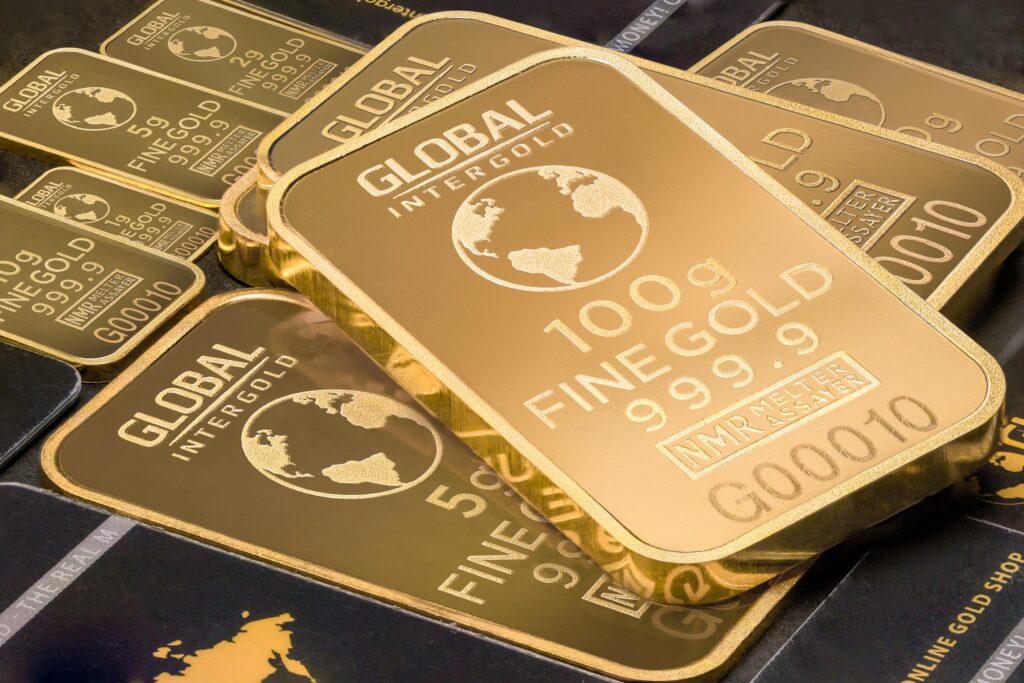
Gold and silver remain the standout performers in the commodity complex. Major institutional analysts have significantly revised their price targets upward due to sticky global inflation, private-sector risk hedging, and aggressive, multi-year gold purchases by emerging market central banks. For instance, Goldman Sachs raised its end-2026 gold target to $5,400 per ounce, citing long-term structural de-dollarization trends. Other Wall Street institutions, including J.P. Morgan, have issued even more bullish projections reaching up to $6,300 per ounce by the fourth quarter of 2026.
Energy (The Supply Glut)
In contrast to the raging bull market in precious metals, the energy sector tells a story of oversupply. Despite episodic geopolitical spikes, underlying fundamentals are soft. J.P. Morgan Global Research expects Brent Crude to average around $60 per barrel over the course of 2026. This bearish trend is underpinned by expanding production capacity outbalancing global demand, meaning investors who bought broad, oil-heavy commodity indexes as a generic inflation play have absorbed losses in real terms.
Industrial Metals (The AI & Green Tailwind)
Industrial metals are behaving less like traditional inflation hedges and more like aggressive “growth” assets. As AI data centers, electrical grid expansions, and global green energy infrastructure projects absorb unprecedented levels of capital expenditure (CAPEX), demand for underlying metals has skyrocketed. Highlighting a severe supply deficit, UBS sharply upgraded its copper outlook, projecting prices to trend toward $15,000 per metric ton by early 2027.
2. Commodities vs. TIPS: The “Real” Hedge
When building a long-term portfolio, professional wealth managers often contrast commodities against Treasury Inflation-Protected Securities (TIPS) to determine the most efficient way to combat rising consumer prices.
| Feature | Commodities | TIPS (Treasury Bonds) |
| Response Type | Proactive: Prices often spike rapidly before consumer price metrics rise. | Reactive: Adjusts principal and coupon payouts after official inflation data is reported. |
| Cash Flow | Zero: Non-productive assets that generate no yield and often cost money to hold or roll. | Positive: Pays a predictable, semi-annual coupon tied to the inflation-adjusted principal. |
| Risk Profile | High: Highly sensitive to localized weather events, regional wars, and sudden supply gluts. | Low: Backed by the full faith and credit of the sovereign government issuer. |
| Portfolio Role | Tactical Asset: Aggressive, short-term protection against sudden supply-side shocks. | Passive Anchor: Baseline, reliable protection for preserving purchasing power over time. |
3. How Investors Access the Market
To navigate the fragmented market, modern investors are moving away from traditional physical holding methods and looking toward highly liquid, low-cost exchange-traded or digital instruments.
Broad Index ETFs
Vehicles like the Vanguard Commodity Strategy Fund (VCMDX) or the Invesco Optimum Yield Diversified Commodities No K-1 ETF (PDBC) provide broad, multi-asset exposure to a diversified basket of over 20 raw materials. These funds are structurally designed to minimize the negative impacts of contract rolling, making them the default option for investors who simply want a generalized, cost-of-living hedge.
Specialized Structural Bets
For investors targeting specific secular shifts—such as the 2026 infrastructure boom—broad indexes are often too diluted. Platforms like Interactive Brokers allow for direct, targeted equity investments in industrial miners or specialized exchange-traded products focusing exclusively on copper, lithium, or nickel, linking the investment directly to technological demand rather than broad inflation curves.
Financialized Physical Custody
To avoid the logistical friction of transport, insurance, and personal vaults, investors frequently look to trusts like the Sprott Physical Gold Trust (PHYS). Unlike standard synthetic funds, these trusts hold fully allocated physical bars under strict custodial supervision, often providing institutional-grade security with lower annual costs than an independent vaulting contract.
Tokenized Commodities
On-chain finance has introduced automated efficiency into the hard asset market. Tokenized gold protocols, such as PAX Gold (PAXG), offer digital tokens backed 1:1 by real London Good Delivery gold bars held in secure Brink’s vaults. This structure serves as a direct liquidity bridge on blockchain networks, allowing digital asset investors to instantly rotate volatile positions into a stable, physical-backed haven without leaving the network.
4. The Structural Flaw: Why Commodities Fail Long-Term Holders
The ultimate reason commodities often deliver a “false promise” to long-term portfolios is rooted in market structure. Unlike equities, which represent shares of productive, cash-generating businesses, raw materials are inert. A bushel of wheat or a barrel of oil cannot innovate, expand its profit margins, or reinvest its earnings to achieve compounding growth.
Furthermore, most exchange-traded commodity products do not buy physical goods; they trade futures contracts. When a fund must continuously sell an expiring contract and purchase a later-dated contract to maintain its exposure, it faces the hazard of Contango.
If the future price is higher than the current spot price, the fund is forced to buy high and sell low every single month. This structural drag, known as roll loss, quietly destroys capital over multi-year horizons. Over a decade, a commodity’s spot price can rise significantly while the corresponding ETF finishes flat or deeply in the red due to the persistent negative carry of the futures curve.
5. Balancing the Portfolio: The 5% Rule
Because of high volatility and the structural drag of futures markets, institutional asset allocators generally recommend keeping broad commodity exposure limited to a 2% to 5% allocation.
An allocation exceeding 10% risks exposing an entire retirement fund to severe, multi-year drawdowns. While a commodity supercycle can produce staggering short-term returns, the inevitable mean reversion can wipe out those gains quickly. Rather than relying on non-yielding raw assets as a primary defense, long-term wealth builders focus on high-quality companies that possess intrinsic pricing power.
To evaluate whether a business can successfully pass the costs of inflation down to its consumers without damaging its profit margins, investors utilize objective fundamental analysis platforms. Rather than trying to forecast unpredictable weather patterns or spot oil prices, a platform like Tykr allows investors to focus on rigorous financial metrics. Tykr calculates a clear “Margin of Safety” and “Financial Health Score” for individual stocks, ensuring that your core wealth is anchored in productive, compounding assets that natively outpace inflation, rather than speculative physical goods burdened by holding fees.
FAQ
Is gold considered the single best commodity hedge for 2026?
Historically and in the current climate, gold remains the most consistent defensive hedge. However, macroeconomic changes create headwinds. Analysts at BMI (a Fitch Solutions company) note that if global central banks alter the cadence of their monetary easing cycles in the latter half of 2026, the gold rally could experience sharp intermediate corrections as real interest rates shift.
Why is investing in agricultural commodities particularly difficult?
Agricultural products like wheat, corn, and soybeans are highly perishable and cyclical, meaning their futures curves spend extended periods in severe contango. The roll costs of maintaining these positions over multiple years almost entirely erase any benefit from short-term retail price increases.
Can Bitcoin be categorized alongside traditional commodities?
The U.S. Securities and Exchange Commission (SEC) and the Commodity Futures Trading Commission (CFTC) legally classify Bitcoin as a digital commodity. While it lacks the industrial use-case of copper or the historic pedigree of gold, its programmatic scarcity makes it an attractive “digital store of value” for younger demographic cohorts, though its annualized volatility is roughly five times greater than physical gold.
What exactly defines a commodity “Supercycle”?
A commodity supercycle is an extended, multi-decade structural trend where demand consistently outpaces global supply, usually driven by massive industrialization or global urbanization. While the early 2021 post-pandemic recovery resembled the start of a supercycle, the 2026 energy imbalances demonstrate that commodity performance has become highly localized and sector-specific, rather than universally rising.
Which brokerage platforms are best suited for beginners looking to invest?
For retail investors seeking traditional, low-cost access to diversified commodity ETFs and trusts, established tier-one brokerages such as Fidelity, Charles Schwab, and Vanguard offer excellent account options with zero-commission structures on broad index funds.
How does a stock analysis tool protect against inflation better than a raw material?
A tool like Tykr enables you to locate high-quality, dividend-paying companies that grow their underlying earnings faster than the rate of inflation. While a barrel of oil sits passively in a tank losing value to storage costs, a high-scoring business found on Tykr actively generates cash flow, modifies its prices to match inflation, and compounds your capital automatically over the long term.