
Real estate has long been recognized as one of the most stable asset classes for wealth preservation and cash flow. However, traditional property investment carries notable entry barriers: high capital requirements, illiquidity, complex legal procedures, and ongoing administrative overhead.
In recent years, the tokenization of Real-World Assets (RWAs) has emerged as a practical solution to these friction points. Leading this space is Lofty Crypto, a platform that leverages the Algorand blockchain to fractionalize residential real estate. By converting property ownership into digital assets, the platform allows individual investors to acquire fractional shares in income-generating properties.
👉 Register on Lofty Crypto & Claim Your Referral Bonus Here 👈
The Concept of Tokenized Real Estate
Tokenization refers to the process of converting ownership rights of a physical or financial asset into a digital token registered on a blockchain ledger. In real estate, this model divides a property’s total value into thousands of standardized digital units.
Rather than buying an entire residential unit or commercial space, an investor can purchase individual tokens representing a fraction of the underlying property. Each token entitles the holder to a proportional share of the net rental income and any potential long-term capital appreciation.
Legal Structure Behind Tokenization
To connect physical assets with blockchain technology, legal frameworks are essential:
- LLC Ownership: Each property on the platform is held by its own dedicated Limited Liability Company (LLC).
- Tokenized Shares: The digital tokens represent membership interests (equity shares) in that specific LLC.
- Property Management: Professional third-party managers handle physical maintenance, tenant relations, and lease collections, making the asset passive for token holders.
Why Lofty Crypto Built on the Algorand Blockchain
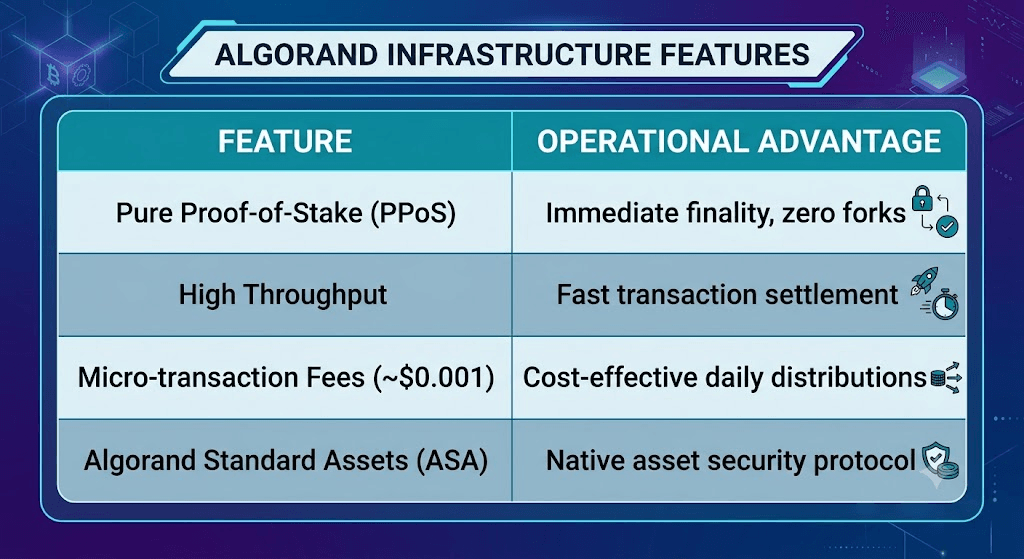
The infrastructure choice is critical for fractional asset platforms. Lofty opted for the Algorand blockchain due to several architectural advantages tailored for real-world asset applications:
1. Minimal Transaction Costs
Because transaction fees on Algorand are fractions of a cent, the protocol allows platforms to issue daily rental yields directly to token holders without high gas fees eroding overall returns.
2. Transaction Speed and Finality
Algorand achieves transaction finality in seconds without the risk of blockchain forks. This ensures that trades, property purchases, and ownership transfers are settled securely in real time.
3. Native Asset Standard (ASA)
Lofty issues property tokens as Algorand Standard Assets (ASAs). Unlike complex smart contract-based tokens on some other chains, ASAs are built directly into Algorand’s Layer-1 protocol, reducing smart contract risks and execution vulnerabilities.
👉 Explore Available Tokenized Properties on Lofty Today 👈
Mechanics: How Investing in Lofty Works
The end-to-end process for an investor on Lofty combines traditional real estate diligence with automated Web3 rails.
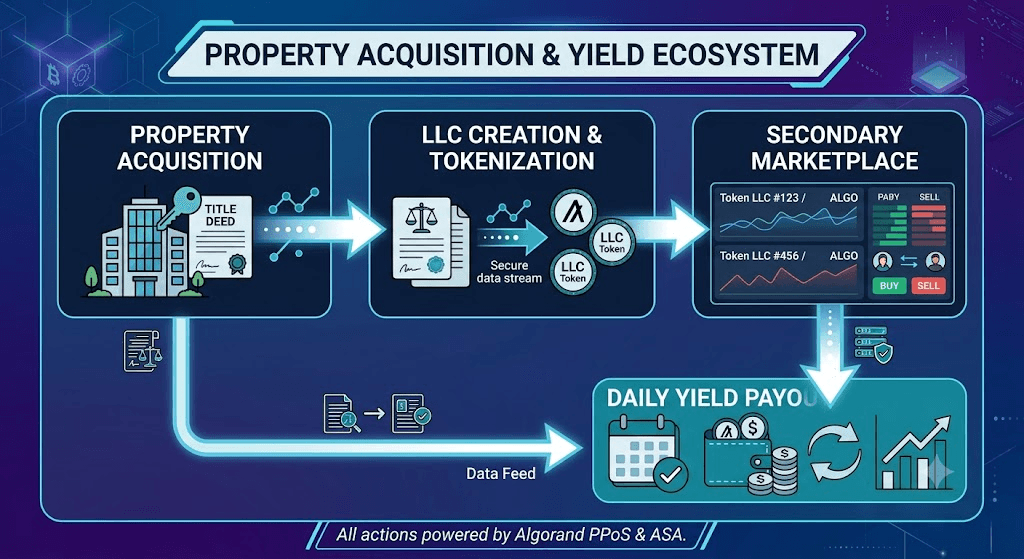
- Property Selection & Due Diligence: The platform and local partners identify single-family or multi-family rental properties based on cash flow potential, location metrics, and neighborhood growth.
- LLC Formation & Minting: A dedicated LLC is created to purchase the property. Tokens representing membership in the LLC are minted on the Algorand network.
- Investor Onboarding: Investors pass standard Identity Verification (KYC/AML) protocols before purchasing tokens using fiat (ACH, card) or supported cryptocurrencies.
- Daily Income Distributions: Rental payments collected from tenants are converted into stablecoins (USDC) and distributed daily directly to token holders’ connected Algorand wallets.
- Secondary Market Liquidity: Unlike traditional real estate lockup periods, users can buy or list property tokens on an integrated secondary order book, improving liquidity compared to physical real estate transactions.
Governance and Risk Factors
Property Governance
Token holders maintain voting rights on key operational decisions regarding the property. Important matters—such as executing major repairs, modifying rental rates, changing property management firms, or approving an eventual sale of the home—are put to an automated on-chain vote proportional to ownership tokens held.
Risk Considerations
While tokenized real estate lowers barrier-to-entry costs, investors face standard real estate and crypto-native risks:
- Occupancy Risk: Vacancies directly impact daily rental yield distributions.
- Liquidity Risk: Although a secondary market exists, execution times depend on active buyer demand for specific property tokens.
- Market Conditions: Local real estate valuations can fluctuate based on broader economic conditions and interest rates.
Conclusion
The integration of Lofty Crypto with the Algorand blockchain represents a functional case study of Real-World Asset (RWA) tokenization. By eliminating substantial upfront capital requirements and streamlining administrative friction through smart contracts, the model provides a scalable bridge between traditional real estate markets and blockchain technology.